Why did Jesus become human and live without sin?
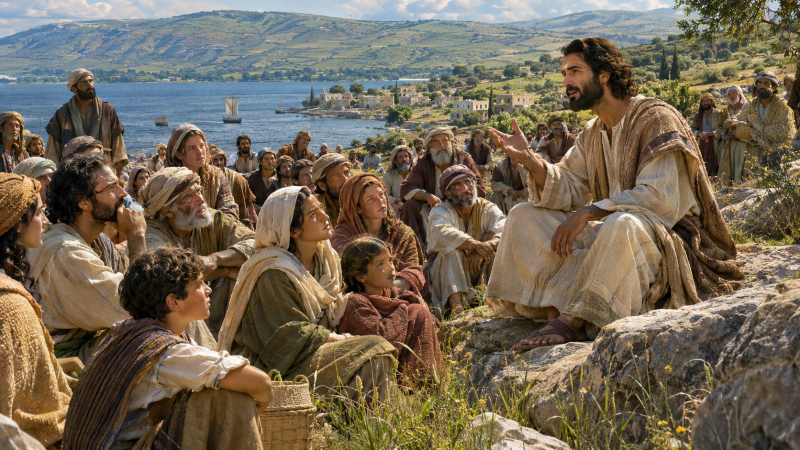
Jesus was born as a baby, grew up in a family, and worked before He began preaching. Yet He was much more than an extraordinary man. The Bible tells us that He existed long before His birth and that He was God. So why did He come to earth as a human being? And why is it so important that He never sinned during His life?
Jesus became human to restore the broken relationship between God and humanity. He did not simply come to teach us how to live. He experienced human life Himself, including hunger, tiredness, and sadness. He also faced temptation, but He always remained obedient to God the Father. This made Him different from every other person. Because He was without sin, He could fulfill the mission He had come to earth to accomplish: bringing people back into a relationship with God.
Jesus existed before He was born in Bethlehem
When we think about Jesus, we often begin with Mary, Joseph, and His birth in Bethlehem. But His life did not begin there. The apostle John calls Jesus "the Word" and writes:
In the beginning was the Word, and the Word was with God, and the Word was God. (John 1:1)
A little later, John explains that the Word became human and lived among us (John 1:14). This means that Jesus did not begin to exist when Mary became pregnant. He was already there before creation and came into the world as a human being at a specific point in history. Paul also writes about Jesus:
And He is before all things, and in Him all things consist. (Colossians 1:17)
Jesus not only existed before creation, but everything was also created through Him (Colossians 1:16). Think about that for a moment. The very world in which Jesus would later grow up existed because He had created it. The trees, the water, and the people around Him were all part of His creation. Yet He chose to enter that world and live in it as a human being.
The Bible speaks about God the Father, the Son, and the Holy Spirit. They are three Persons and together one God. We call this the Trinity. Jesus came to earth as the Son of God. When He became human, He did not stop being God. He was fully God and at the same time became fully human. However, this did not mean that He lived on earth in the same glory He had in heaven. He willingly laid aside His heavenly glory and privileges and humbled Himself to live as a human being (Philippians 2:6–8).

The Son of God chose to become human
In Philippians 2, Paul explains how remarkable it was that Jesus became human. Although He was God, He chose to humble Himself and take the form of a servant. Paul writes that Jesus:
“made Himself of no reputation, taking the form of a bondservant, and coming in the likeness of men.” (Philippians 2:7)
When Paul describes Jesus as emptying Himself, he does not mean that Jesus stopped being God. Jesus remained God, but He chose to live and serve as a human being. He did not use His exalted position to avoid the ordinary experiences of human life. The Creator of heaven and earth was willing to be born as a helpless baby.
Luke tells us how the angel Gabriel appeared to Mary and announced that she would have a Son. His name would be Jesus, He would be called the Son of the Most High, and He would reign as King forever (Luke 1:30–33). Mary was still a virgin, so she wondered how she could have a child without having sexual relations with a man. Gabriel explained that the Holy Spirit would come upon her and that God's power would make this miracle possible (Luke 1:34–35).
Jesus was therefore not conceived in the usual way. His birth was the result of God's supernatural work. At the same time, He was truly born from Mary and had a human body. Like everyone else, He needed to grow, eat, sleep, and rest.
Jesus had a real childhood and an ordinary job
The Gospels do not tell us much about Jesus' childhood. However, the events they do describe show that He went through the normal stages of human development. Jesus was born as a baby and grew into an adult, just like everyone else. Luke tells us that after His birth, Mary wrapped Him in cloths and laid Him in a manger (Luke 2:6–7). Later, we read that Jesus continued to grow in wisdom and in favor with God and people (Luke 2:52).
Jesus grew up in a Jewish family at a time when Israel was under Roman rule. The Bible records one remarkable event from His childhood. When Jesus was twelve years old, He traveled with His parents to Jerusalem to celebrate the Passover. On their way home, His parents realized that He was not with the group of travelers. After searching for Him, they found Him in the temple, sitting among the teachers, listening to them and asking questions. Everyone who heard Him was amazed by His understanding and answers (Luke 2:41–50). This event shows that Jesus already had a special relationship with His heavenly Father at a young age.
As Jesus grew older, He continued to experience ordinary daily life. Before beginning His public ministry, He lived in Nazareth, where people knew Him as "the carpenter" (Mark 6:3). He knew what it was like to be part of a family, interact with other people, and work with His hands. Although He was the Son of God, He did not grow up in a palace or in a place where everything revolved around Him. He experienced the everyday realities of human life.
I find that remarkable. The Son of God could have chosen to come to earth in a completely different way. Instead, He was born as a helpless baby, grew up in a family, and learned a trade. He went through the same stages of life that we experience. Because of this, Jesus knows from personal experience what it means to live as a human being on earth.

Jesus understands human weakness and temptation
Because Jesus truly became human, He knows what human life is like. He understands our circumstances not only because He is God, but also because He personally experienced hunger, tiredness, and sadness.
After fasting for forty days in the wilderness, Jesus became hungry (Matthew 4:2). While traveling through Samaria, He grew tired and sat down beside a well (John 4:6). And when He came to the tomb of Lazarus, He wept (John 11:35). Jesus had a real human body and experienced human emotions.
This is important to understand. When you feel exhausted, are grieving, or are going through a difficult time, you do not have to wonder whether Jesus understands what you are experiencing. The writer of Hebrews tells us that Jesus can sympathize with our weaknesses because He faced temptation just as we do, yet remained without sin (Hebrews 4:15).
Jesus understands our human weaknesses without ever having made a wrong choice Himself. He knows what it means to face temptation, but He never gave in to it.
Being tempted is not the same as sinning
There is an important difference between facing temptation and actually committing sin. Temptation occurs when you find yourself in a situation where you are encouraged to do something that goes against God's will.
Imagine someone says something unkind to you. You have the opportunity to respond angrily and hurt that person. At that moment, you are facing temptation. But simply having the opportunity to react that way does not mean you have sinned. What matters is how you choose to respond.
Jesus also faced temptation. Matthew describes how the devil tried to persuade Him to disobey God in the wilderness. Jesus had been fasting for forty days and was hungry. The devil tried to take advantage of His hunger, but Jesus did not give in. He remained obedient to His Father and responded with God's Word (Matthew 4:1–11).
His obedience was not limited to His time in the wilderness. Jesus remained without sin throughout His entire life. Peter writes about Him:
“Who committed no sin,
Nor was deceit found in His mouth” (1 Peter 2:22)
Think about someone who always tells the truth as long as it costs him nothing. Being honest becomes much harder when telling the truth could mean losing something important. Situations like these reveal whether a person is truly committed to honesty. Jesus remained obedient to His Father even when circumstances were difficult.
The Bible tells us that everyone has sinned (Romans 3:23). Jesus is the only exception. He never did anything that went against God's will. Therefore, He did not need forgiveness for any sins of His own. Because He was without sin, He could fulfill the special mission that had brought Him to earth.

Jesus showed us what it means to live with the Father
Jesus not only lived without sin, but He also continually focused on doing His Father's will. Through His words and actions, He showed us how God wants people to live: in a close relationship with Him, in obedience to Him, and in love toward others.
When Jesus was about thirty years old, He began His public ministry (Luke 3:23). He preached that the kingdom of heaven was near and called people to repent (Matthew 4:17). This meant turning away from their sins and directing their lives toward God.
But Jesus did more than teach. He also showed people God's goodness through His actions. He healed the sick and set people free from bondage (Matthew 4:23–24). In this way, people could not only hear about God's kingdom but also see what His power and goodness could mean in their lives.
This is why Jesus is also our example. He did not simply tell people how to live. He showed them through His own life. His followers could learn from Him what it meant to obey God, love others, and trust their heavenly Father. He never asked people to do something that He Himself refused to do.
Why Jesus is the only way to God
We have seen that Jesus existed before creation and that He was God. Yet He chose to become truly human. He grew up, worked, experienced human weaknesses, and faced temptation. But unlike everyone else, He never sinned. This makes Jesus much more than an extraordinary teacher or a good example. He came to earth with a mission that no one else could accomplish: restoring the broken relationship between God and humanity. Jesus said:
“I am the way, the truth, and the life. No one comes to the Father except through Me.” (John 14:6)
Jesus is not saying that there are several ways to reach God. He makes it clear that no one can come to the Father except through Him. We cannot earn our way to God by trying hard enough or doing enough good works. Everyone has sinned and needs forgiveness. Only Jesus lived without sin, and because of this, He could become our Savior.
This is why it was necessary for Jesus to become truly human and live without sin. He did not come simply to tell us about God, but to reconcile us to Him. His life on earth prepared the way for His death and resurrection, through which He accomplished that reconciliation. We will explore exactly how Jesus did this in a separate Bible study.
What does this mean for you? First, you do not need to place your trust in your own perfection, but in Jesus. He is the only way to the Father. At the same time, His life can encourage you to follow Him. Jesus knows how difficult it can sometimes be to remain obedient. When you face temptation or difficult choices, you can look to His example. Listen to God's Word, trust Him, and choose to do His will.