Why can’t God simply forgive our sins?

Imagine someone steals money from you. You take the person to court, but the judge says, “I like this person, so I’m going to let it go.” Would you think that was fair? You have lost your money, while the person who stole it faces no consequences. A judge who acts this way is not doing what is right. But if that is wrong for a human judge, what about God? He loves people and wants to forgive them. So why can’t He simply overlook their sins?
The answer has to do with who God is. He is full of love, but He is also perfectly just. He does not approve of evil or pretend it never happened. At the same time, He does not want people to be lost. That is why He made a way for us to be forgiven through Jesus Christ. To understand why Jesus had to come to earth, we first need to understand why God's love and justice cannot be separated.
Love doesn't mean anything goes
Loving someone does not mean approving of everything they do. Think of parents who discover that one of their sons has hurt his brother. They still love their son, but they also need to address what he has done. After all, they care about the child who was hurt, too.
The same is true when someone steals a loaf of bread from a baker. It might not seem like a big deal, but the baker worked to earn a living. Even if the thief is a close friend, stealing is still wrong. You can love someone without making excuses for their behavior.
The same is true of God's love. God loves people, but that does not mean He approves of everything they do. He also cares about those who suffer because of someone else's wrongdoing. Because God is both loving and just, He takes injustice seriously.
God is always just
In ancient Israel, people settled legal disputes at the city gates. Judges had to examine what had happened and decide who was right. But human judges do not always know all the facts. They can make mistakes, even when they sincerely want to do what is right.

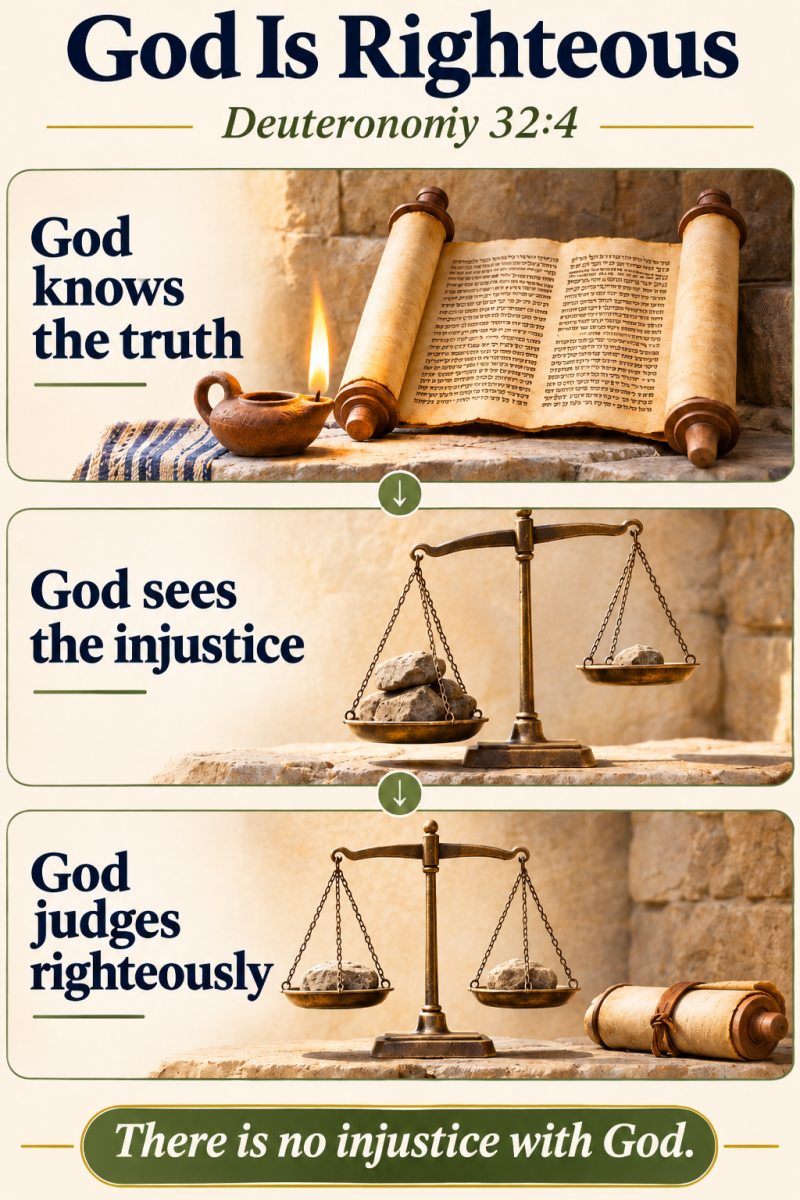
God is different. His justice is not a rule He follows one day and ignores the next. It is part of who He is. Moses says this about God:
A God of truth and without injustice; Righteous and upright is He. (Deuteronomy 32:4)
God never lies, deceives, or judges unfairly. What He says always agrees with what He does. He does not call something wrong today and then approve of it tomorrow simply because He likes the person who did it. An innocent person should not be treated as guilty, and someone who does wrong cannot simply pretend nothing happened. God even knows our thoughts and motives. That is why His judgment is always based on the full truth.
Why is every sin also a sin against God?
When you lie to someone, you can damage their trust. When you steal, you cause someone else to lose something that belongs to them. Sin has consequences for other people, but it does not end there. Whenever we do something against God's will, we also sin against Him. We can see this clearly in the life of King David.
David committed adultery with Bathsheba and arranged for her husband, Uriah, to be killed. God then sent the prophet Nathan to confront David about his sin (2 Samuel 12:1–12). When David admitted his guilt, he said:
I have sinned against the Lord. (2 Samuel 12:13)
David also speaks about his guilt before God in Psalm 51. This does not mean he was denying what he had done to Bathsheba and Uriah. Their suffering mattered. But David understood that he had done more than hurt other people. He had also disobeyed God. The same is true for us. Whether we lie, steal, feel jealous, or deliberately hurt someone, we are not only accountable to other people for our actions. We are also accountable to God.
Why can't good deeds erase our sins?
Perhaps you think, "I try to live a good life, help others, and avoid deliberately hurting anyone." Those are good things, but they do not change the sins you have already committed. Doing something good does not automatically erase something wrong you did earlier.
Think of a student who fails a test. The teacher might care deeply about that student and genuinely want to help. But the teacher cannot simply give the student a high grade for answers that were wrong. Even if the student does all their homework perfectly afterward, that does not change the answers on the earlier test. In the same way, we cannot undo our sins by doing good things later. Paul writes:
for all have sinned and fall short of the glory of God, (Romans 3:23)
Notice the word "all." No one can say they have never sinned. Some people have committed serious sins that everyone knows about. For others, their sins might be mostly pride, lying, or selfishness. We can compare ourselves with other people and think we are doing better than they are, but that does not change God's standard. Even if we decide to do everything right from today onward, our past sins still remain. That is why we need more than good intentions. We need forgiveness and restoration, and we cannot give those things to ourselves.

How can God remain just and still forgive?
God could have left us to face the consequences of our sins and the judgment we deserve. He was under no obligation to forgive us. Yet He wanted to restore the relationship between Himself and humanity. Because we cannot make up for our sins on our own, God Himself provided the solution.
In Romans 3:25, Paul explains that God presented Jesus as the sacrifice for our sins, through faith in His blood. This makes reconciliation possible, meaning that our broken relationship with God can be restored. God does not pretend our sins are unimportant. Jesus paid the price for them. That is why Paul can say in the following verse:
...that He might be just and the justifier of the one who has faith in Jesus. (Romans 3:26)
This is the heart of the gospel. God is just, but He also wants to forgive us. That is why Jesus took the punishment for our sins. Everyone who believes in Him can know that their guilt has been taken away. Not because they have done enough good things, but because Jesus paid for their sins. God does not forgive our sins by simply excusing evil, but because Jesus has taken the punishment for them. This is how God's love and justice come together.
God's love calls us to repent
The fact that God wants to forgive us does not mean we can simply continue living in sin. His love invites us to turn back to Him. This is called repentance. You acknowledge that you have done wrong, change the way you think, and turn away from sin to follow God. David showed how important it is to admit our wrongdoing. When Nathan confronted him, David did not blame someone else. He confessed his sin. We should not make excuses for our mistakes or try to make them seem less serious than they are. That is why Peter calls people to repent:
Repent therefore and be converted, that your sins may be blotted out, (Acts 3:19)
We do not earn forgiveness through repentance. Jesus has already paid the price for our sins. But believing in Jesus means that we want to follow Him. When we receive God's love, we no longer want to hold on to the sins from which Jesus has set us free.
But what happens if you are a believer and you sin again? You do not have to hide from God. John writes:
If we confess our sins, He is faithful and just to forgive us our sins and to cleanse us from all unrighteousness. (1 John 1:9)
Notice that John describes God as not only faithful but also just. This connects with what Paul explains: because of Jesus, God can forgive our sins without setting aside His justice. That is why we can come to Him honestly, confess our sins, and trust that He will forgive and cleanse us.
What does God's justice mean for your life?
Because God is just, He wants us to live honestly and treat others fairly, too. This means we should not make excuses for our mistakes. Instead, we need to admit them and, whenever possible, make things right. Have you lied? Tell the truth. Have you stolen something? Give it back. Have you hurt someone? Admit what you did and try to make things right. These actions do not earn God's forgiveness, but they show that you no longer want to live in sin.
God takes sin seriously because He is good and just. He does not call evil good or simply overlook injustice. Yet He has not left us to carry our guilt alone. Out of love, He sent Jesus Christ so that everyone who believes in Him can receive forgiveness. This is God's grace: He gives us what we could never earn on our own.
God's love and justice do not contradict each other. He condemns sin, but through Jesus, He offers us forgiveness. That is why we can repent of our sins and put our trust in Jesus. We do not have to work off our guilt ourselves. Instead, we can receive His forgiveness and live a new life.