What was the main message of Jesus?
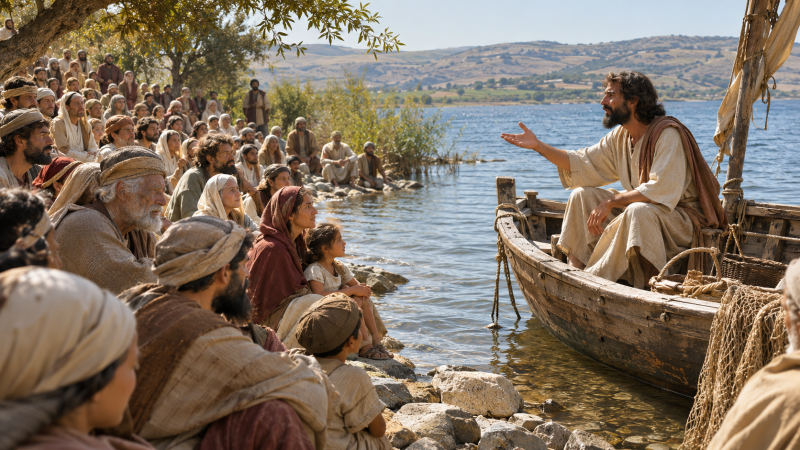
Imagine someone who has never read the Bible asks you what the main message of Jesus was. How would you answer? Perhaps you would think of God's love, forgiving others, or eternal life. These are all important topics, but there is one theme that runs throughout the teachings of Jesus and connects them all: the kingdom of God.
Jesus proclaimed the good news that God's kingdom had come near. In this kingdom, God reigns, and people can live under His rule. Jesus did not just explain what this meant; He also demonstrated it through His actions. He forgave people's sins, healed the sick, set people free from demons, and taught them how to live with God. To truly understand the message of Jesus, we need to look at both His words and His actions.
What message did Jesus begin His ministry with?
Jesus was about thirty years old when He began His public ministry. After John the Baptist baptized Him, the Holy Spirit led Him into the wilderness. There, Jesus fasted for forty days and resisted the temptations of the devil. He then returned in the power of the Holy Spirit to Galilee, a region in northern Israel (Luke 3:23 and 4:1-14). Mark tells us what message Jesus began His ministry with:
Now after John was put in prison, Jesus came to Galilee, preaching the gospel of the kingdom of God, and saying, “The time is fulfilled, and the kingdom of God is at hand. Repent, and believe in the gospel.” (Mark 1:14-15)
The word gospel means “good news.” For centuries, the prophets in the Old Testament had spoken about the coming of the Messiah. Now the promised King had come, and Jesus began to make God's kingdom known to the people.
Jesus called people to repent and believe the gospel. Repentance means turning away from sin and turning to God. Believing means trusting God and what He says. Jesus wanted people to do more than simply listen to His teaching. He wanted them to leave their old lives behind, believe His words, and begin living for God.
Why did Jesus come to earth?
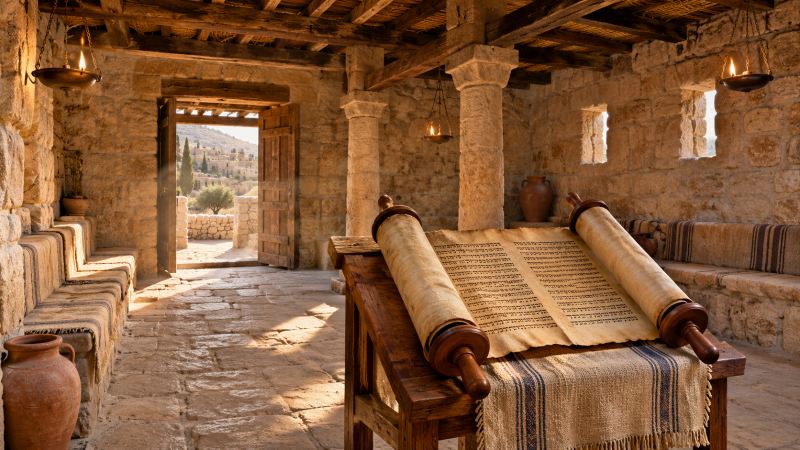
In Luke 4, we read that Jesus visited Nazareth, the town where He had grown up. On the Sabbath, He went to the synagogue, a building where Jewish people gathered to read the Scriptures and receive teaching. Jesus was handed the scroll of the prophet Isaiah and read a passage describing what the Messiah would be anointed to do.
The Holy Spirit would be upon Him to bring good news to the poor, heal the brokenhearted, bring freedom to captives, and restore sight to the blind. After closing the scroll, Jesus told those present that this prophecy had been fulfilled that very day. The One Isaiah had spoken about centuries earlier was now standing among them (Luke 4:16-21).
Later in the same chapter, we read how Jesus carried out this mission. In Capernaum, He taught the people, set a man free from a demon, and healed Simon Peter's mother-in-law, who had a high fever. As the sun was setting, people brought their sick to Jesus. He laid His hands on each of them and healed them. The next day, the people went looking for Him. They wanted Jesus to stay with them, but He said:
“I must preach the kingdom of God to the other cities also, because for this purpose I have been sent.” (Luke 4:43)
Pay particular attention to the last words of Jesus: “because for this purpose I have been sent.” Jesus knew what God the Father had sent Him to do. The people in Capernaum were not the only ones who needed to hear the good news and experience the power of God's kingdom. People in other cities needed to experience this as well.
Jesus proclaimed the kingdom through words and actions
Matthew gives us a clear picture of what Jesus did as He traveled throughout Galilee:
And Jesus went about all Galilee, teaching in their synagogues, preaching the gospel of the kingdom, and healing all kinds of sickness and all kinds of disease among the people. (Matthew 4:23)
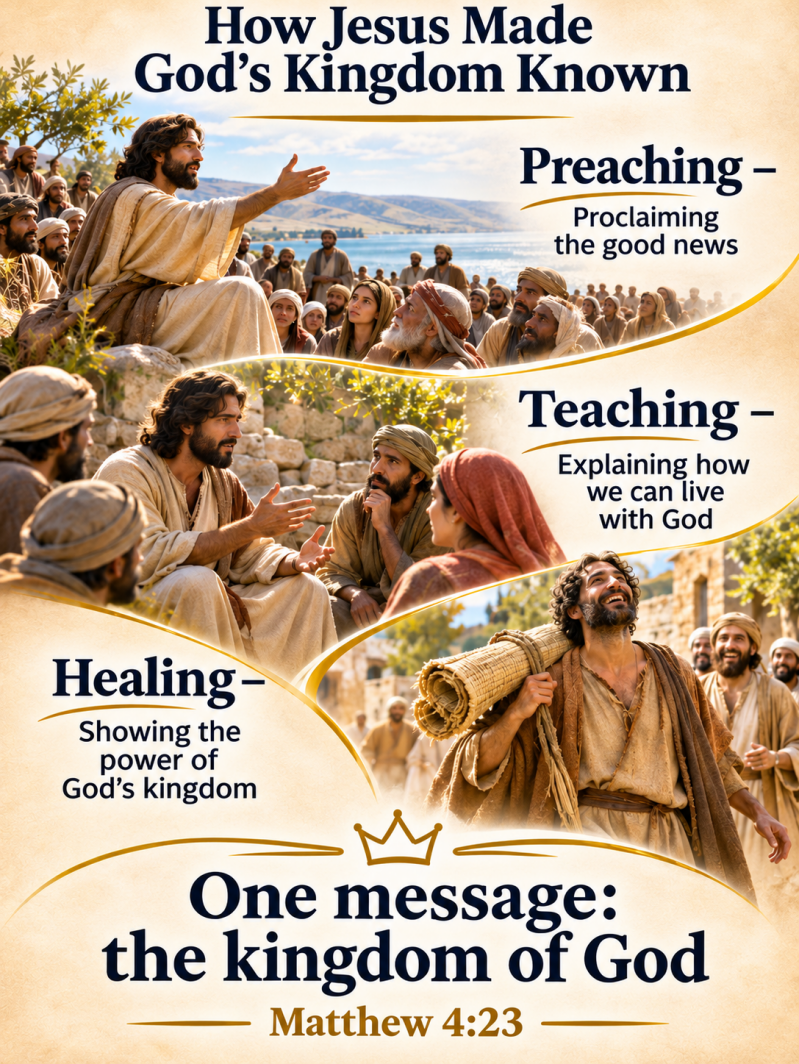
In this Bible verse, we see three important aspects of Jesus' ministry:
Preaching: Jesus proclaimed the good news of God's kingdom.
Teaching: Jesus explained what the kingdom was all about and how people could live under God's rule.
Healing: Jesus allowed people to experience the power of God's kingdom.
These three aspects were closely connected and often came together in Jesus' ministry. We see this, for example, in the story of the paralyzed man in Matthew 9:1-8. When the man was brought to Jesus, Jesus shared the good news by telling him that his sins were forgiven. Some of the scribes, whose work was to study and explain the Scriptures, believed that Jesus was speaking against God by doing this. Jesus used this opportunity to teach those present about His authority to forgive sins on earth. He then demonstrated the power of God's kingdom by healing the paralyzed man. Jesus told him to get up, pick up his bed, and go home. The man got up and went home.
In this one encounter, Jesus did all three: He preached the good news, taught the people, and healed the sick man. These three aspects reinforced one another. When someone's sins are forgiven, we cannot see it with our own eyes. But everyone could see that the man who had been carried to Jesus on his bed was now carrying that same bed home himself. Through this miracle, Jesus confirmed His message and demonstrated that He truly had the authority to forgive sins.
What did the miracles of Jesus reveal?
The miracles Jesus performed also show us that God's kingdom is not something we have to wait for until the future. In Matthew 12:22-28, we read about a demon-possessed man who could neither see nor speak. Jesus healed him, restoring his ability to see and speak. The Pharisees claimed that Jesus cast out demons by the power of the ruler of the demons. Jesus explained to them that a kingdom divided against itself cannot stand. He then said:
But if I cast out demons by the Spirit of God, surely the kingdom of God has come upon you. (Matthew 12:28)
Jesus did not say that God's kingdom would come thousands of years later. This man had experienced the power of God's kingdom right then and there. The power of the devil was broken, and the man was set free and healed.
At the same time, these miracles show us how lovingly Jesus treated people. He did not perform miracles to impress others but had compassion for those who needed Him. In Luke 9:11, for example, we read that Jesus welcomed the crowd, spoke to them about God's kingdom, and healed those who needed healing. In this way, people not only learned about the kingdom but also discovered how good and loving the King is.
Why did Jesus speak in parables so often?
Jesus often used parables to teach people about God's kingdom. A parable is a story or comparison that uses something from everyday life to explain a spiritual truth. Jesus used familiar examples, such as sowing seeds, searching for a valuable pearl, and using leaven to make bread. This helped people picture the spiritual truths He was teaching and made them easier to remember.
However, this was not the only reason Jesus spoke in parables. When His disciples asked Him about this, Jesus explained that they had been given the privilege of knowing the mysteries of the kingdom of heaven, but others had not. Many people heard His words but had closed their hearts to His message. Although they understood the stories, they did not understand their spiritual meaning (Matthew 13:10-17). Through parables, Jesus revealed the mysteries of God's kingdom to those who had open hearts to His teaching, while these mysteries remained hidden from those who rejected His message.
A good example of this is the parable of the sower. Jesus told a story about a man who scattered seeds on different types of soil. Although people were familiar with sowing seeds, this did not mean they understood the spiritual truth Jesus was teaching through this story. The disciples received an explanation of the parable: the seed represents the Word of the kingdom, and the different types of soil show how people receive this Word (Matthew 13:18-23).
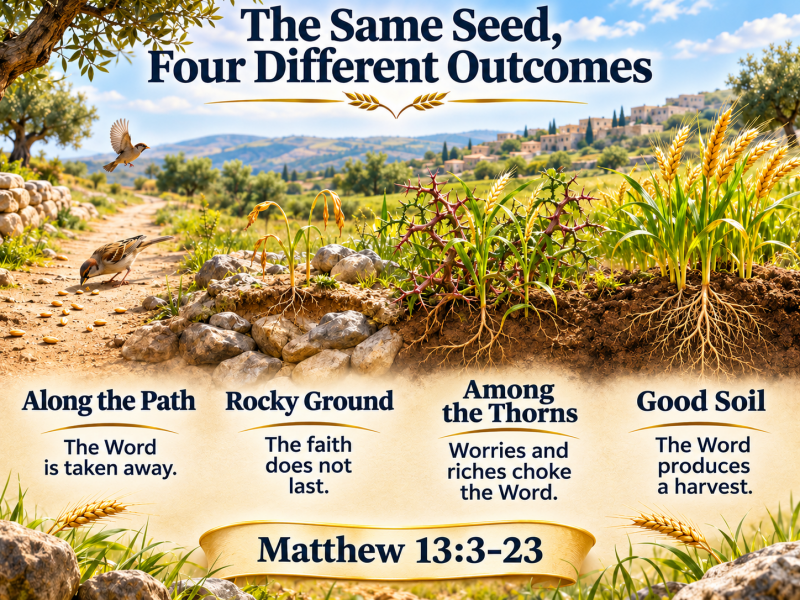
Jesus used parables not only to explain spiritual truths through familiar examples but also to reveal the mysteries of God's kingdom to those who were willing to listen to Him and receive His teaching.
Jesus is the King of God's kingdom
Through His preaching, teaching, miracles, and parables, Jesus revealed what God's kingdom was all about. But Jesus did more than speak about this kingdom. He Himself is its King. After Jesus died on the cross and rose from the dead, He said to His disciples:
And Jesus came and spoke to them, saying, “All authority has been given to Me in heaven and on earth.” (Matthew 28:18)
Jesus did not say that He would receive all authority sometime in the future. All authority has already been given to Him! The same Jesus who traveled throughout Galilee, proclaimed the good news, taught the people, and healed the sick is alive and reigns today. Through His sacrifice on the cross, He made it possible for us to receive forgiveness for our sins and become part of His kingdom. We do not have to earn this through our own good works; we receive it by grace.
When we read the stories about Jesus, we discover not only what God's kingdom is all about but also who its King is. When Jesus forgives people, we discover His grace. When He heals the sick, we see His goodness and power. When He teaches people, we discover how He wants us to live under His rule. By studying the ministry of Jesus, we not only gain a deeper understanding of God's kingdom but also come to know our King better.