How did the early Christians preach the kingdom of God?
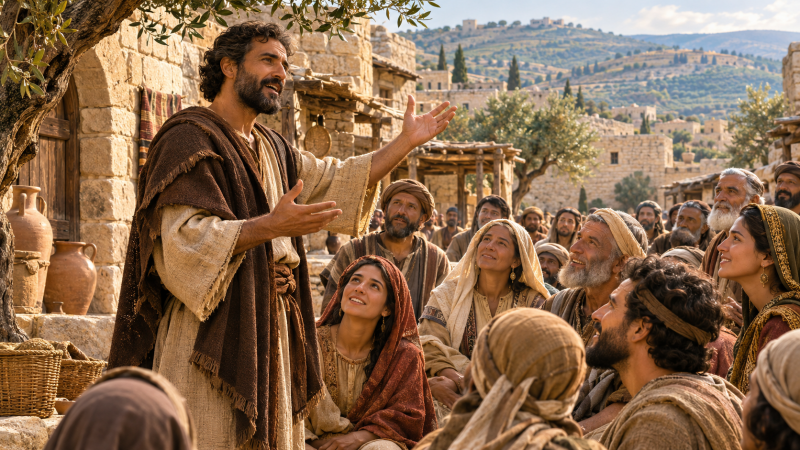
The book of Acts begins and ends with the same subject: the kingdom of God. At the beginning, we read that Jesus spoke to His disciples about the kingdom after His resurrection. At the end, we read that Paul preached the kingdom of God from a rented house in Rome. During the years in between, the gospel spread across large regions, and churches were established in many places.
The early Christians continued the work that Jesus had begun on earth. They told people about Jesus, how they could be saved, and how they could become part of His kingdom. They not only preached the gospel with words but also demonstrated the power of the kingdom through signs and wonders. Jesus had already prepared His disciples for this work while traveling with them throughout Israel.
Jesus sent out His twelve disciples
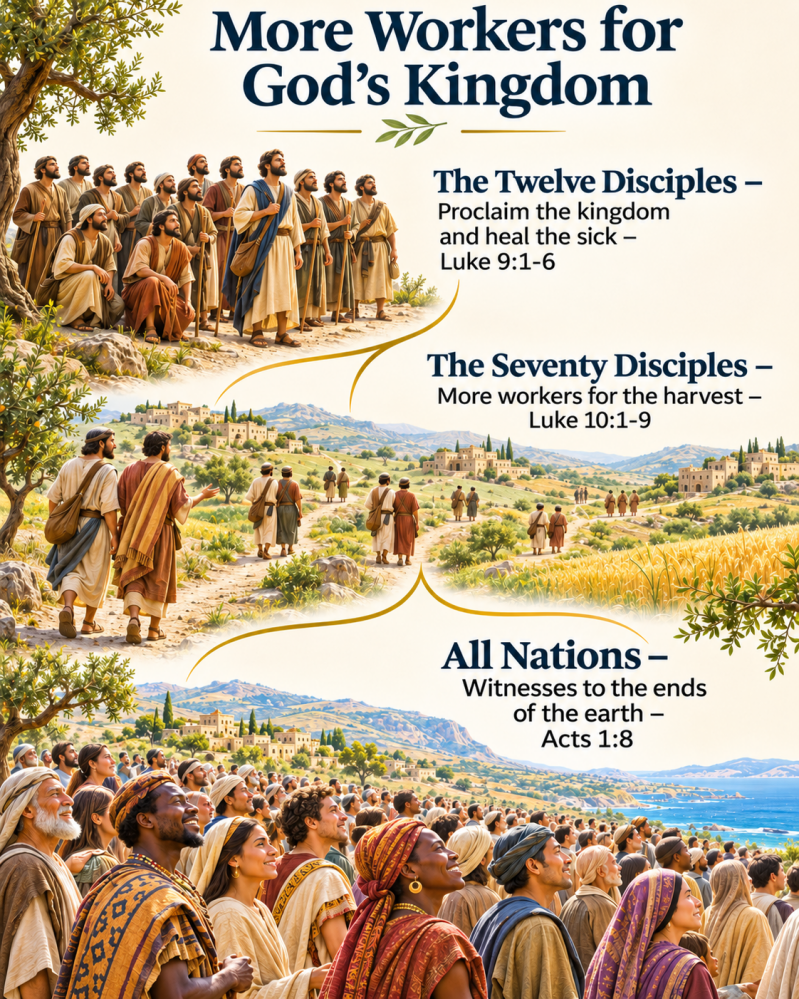
The twelve disciples had spent a lot of time with Jesus. They had listened to His teaching and watched Him heal the sick and cast out demons. One day, Jesus called them together and gave them the power and authority to heal the sick and cast out demons. He then sent them out with the following assignment:
He sent them to preach the kingdom of God and to heal the sick. (Luke 9:2)
Jesus not only gave His disciples an assignment but also gave them the authority to carry it out. You can compare this to an employee who is authorized to sign an agreement on behalf of a business owner. The employee does not own the business, but the owner has given him the authority to act on his behalf. In the same way, the disciples were authorized to act on behalf of Jesus. They did not rely on their own strength but on the power and authority Jesus had given them.
As they traveled, they depended on the hospitality of the people who welcomed them. If the people in a town refused to welcome them, they were to move on. In Luke 9:6, we read that the disciples traveled from village to village, preaching the gospel and healing the sick everywhere. In this way, they also reached people who had not yet met Jesus Himself.
Jesus sent out seventy more disciples
In Luke 10, we read that Jesus appointed seventy others. He sent them out in pairs to the towns and places He Himself was going to visit. Wherever they were welcomed, they were to accept the hospitality of the people there. Jesus gave them the following instructions:
[…] heal the sick there, and say to them, ‘The kingdom of God has come near to you.’ (Luke 10:9)
The assignment to preach the kingdom and heal the sick was not just for the twelve disciples. Jesus was involving more and more people in His work. He had told the seventy that the harvest was great, but the laborers were few (Luke 10:2). Many people still needed to hear the good news, and this required people who were willing to go out and share it.
When the seventy returned, they were delighted that even the demons submitted to them in the name of Jesus. However, Jesus pointed them toward something even more important: they could rejoice because their names were written in heaven (Luke 10:17-20). As wonderful as it is to experience signs and wonders, the greatest blessing is that we belong to God and have received eternal life.
Jesus continued to teach about the kingdom after His resurrection
Through His death and resurrection, Jesus had paid the price for our redemption, and God's spiritual kingdom had now been established. Jesus had received all authority in heaven and on earth. Over a period of forty days, He appeared to His disciples and spoke to them about the things concerning God's kingdom (Acts 1:3). Even after His resurrection, the kingdom remained an important part of His teaching.
Before the disciples could go out, they had to wait in Jerusalem for the baptism in the Holy Spirit. Jesus promised them that they would receive power when the Holy Spirit came upon them. Through this power, they would be His witnesses in Jerusalem, Judea, Samaria, and to the ends of the earth (Acts 1:4-8). The gospel was not just for the people of Israel but for everyone on earth.
This promise was fulfilled on the Day of Pentecost. The disciples were filled with the Holy Spirit, and Peter spoke boldly to the people in Jerusalem. He told them that Jesus had risen from the dead and that God had made Him both Lord and Christ. When the people asked what they should do, Peter called them to repent and be baptized. He also promised them the gift of the Holy Spirit. About three thousand people received the Word and were baptized that day (Acts 2:36-42).
Philip preached the kingdom in Samaria
After Stephen's death, great persecution broke out against the church in Jerusalem, forcing many believers to leave the city. However, they did not stop preaching the gospel. Wherever they went, they told people about Jesus. One of these believers was Philip, who had previously been chosen to serve the church in Jerusalem (Acts 6:1-6).
Philip went to a city in Samaria. This was remarkable because Jews and Samaritans generally did not associate with one another (John 4:9). Yet Philip preached Jesus Christ to them. The people listened to his message and saw the signs and wonders he performed. People were set free from demons, and many who were paralyzed or unable to walk were healed. This brought great joy to the city. But what exactly did Philip preach?
But when they believed Philip as he preached the things concerning the kingdom of God and the name of Jesus Christ, both men and women were baptized. (Acts 8:12)
When the apostles in Jerusalem heard that the Samaritans had received the Word of God, they sent Peter and John to them. Although the Samaritans had come to faith and been baptized in water, they had not yet received the baptism in the Holy Spirit. Peter and John prayed for them and laid hands on them, and they received the Holy Spirit (Acts 8:14-17).
What Jesus had done during His earthly ministry was now happening in Samaria. The people heard the gospel of the kingdom and saw its power. They, too, could become part of God's kingdom through Jesus, regardless of their background.
Paul encouraged believers to remain faithful
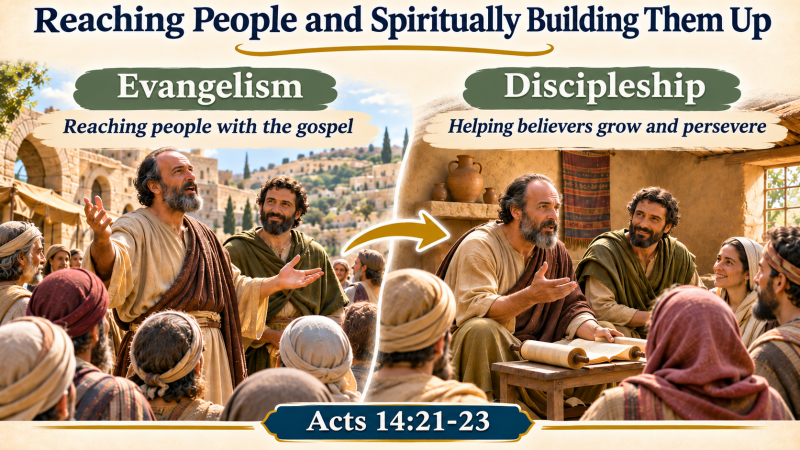
During the first missionary journey of Paul and Barnabas, people came to faith in several places. Although their work bore much fruit, they also faced persecution. After making many disciples in Derbe, they returned to Lystra, Iconium, and Antioch in Pisidia, where they had previously preached the gospel. They went back to strengthen the believers and encourage them to remain firm in their faith. They told them:
[…] We must through many tribulations enter the kingdom of God. (Acts 14:22)
Paul knew from personal experience what it meant to face persecution. In Lystra, he had even been stoned and left for dead. Yet he returned to the city to help the believers. He did not want opposition to cause them to give up their faith in Jesus. When we face persecution because of our faith, it is important for us to remain faithful to Jesus as well. This is not because we earn our salvation through suffering, but because we must continue in our faith.
The work of Paul and Barnabas was not finished once someone came to faith. They wanted the new believers to grow spiritually and learn how to live as followers of Jesus. That is why they also appointed elders in every church and entrusted them with the care of the local believers (Acts 14:23).
Paul taught daily in Ephesus
During a later missionary journey, Paul arrived in Ephesus, an important city in what is now Turkey. He went to the synagogue, a place where Jews gathered to read the Scriptures and receive teaching. For three months, Paul spoke boldly there about the things concerning God's kingdom (Acts 19:8).
When some people began to oppose his message, Paul took the disciples with him to the school of Tyrannus. There he taught every day for two years. As a result, both Jews and Greeks living in the Roman province of Asia heard the Word of the Lord Jesus. God also performed extraordinary miracles through Paul (Acts 19:9-12).
It is remarkable that Paul spent three months speaking about God's kingdom in the synagogue alone. There is so much to learn about the kingdom and what it means to live under the rule of Jesus. This also affects the choices we make. Later in Acts 19, for example, we read that many believers confessed the wrong things they had done. Those who had practiced magic even burned their valuable books. They turned away from their old way of life (Acts 19:18-20).
The kingdom of God was preached even in Rome
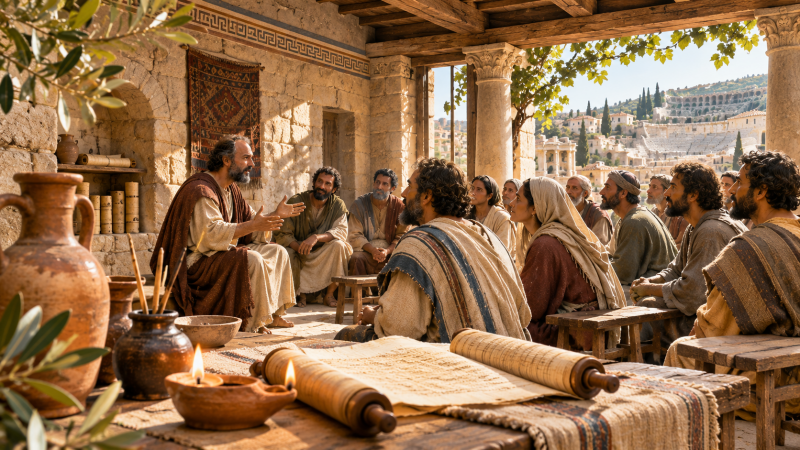
At the end of the book of Acts, Paul is in Rome. He has arrived as a prisoner but is allowed to live in a private residence under the guard of a soldier. Paul invites the Jewish leaders to visit him and uses the Law of Moses and the Prophets to explain God's kingdom to them. From morning until evening, he tries to persuade them to believe in Jesus. Some are convinced, while others refuse to believe (Acts 28:16-28).
Paul spends two years in his rented home and welcomes everyone who comes to see him. The book of Acts ends with these words:
preaching the kingdom of God and teaching the things which concern the Lord Jesus Christ with all confidence, no one forbidding him. (Acts 28:31)
Although Paul could not travel freely around Rome, people could still come to him. He made use of the opportunities he had to reach them. Even his imprisonment did not stop him from preaching the gospel of God's kingdom.
We can also preach God's kingdom
Perhaps you think you need to become a pastor or an evangelist before you can preach the gospel. But think about the believers who left Jerusalem because of persecution. Wherever they went, they preached the Word of God. The responsibility to reach people with the gospel has been given to all believers.
If you have been born again, you are already a citizen of God's spiritual kingdom today. You do not have to wait until you get to heaven or until Jesus returns to earth. God has delivered you from the power of darkness and brought you into the kingdom of His Son (Colossians 1:13). You have also been given the assignment to share the good news of this kingdom. The Holy Spirit wants to give you the power and boldness to do this, just as He did for the early Christians.
At work, among your family members, or in your neighborhood, you meet people who may never have heard what Jesus has done for them. You can tell them about Jesus, call them to faith and repentance, and pray for them when they are sick. God wants to work through you too, so that others can experience His goodness and discover how wonderful it is to live under the rule of Jesus.