Why Did God Give Us Authority Over the Earth?
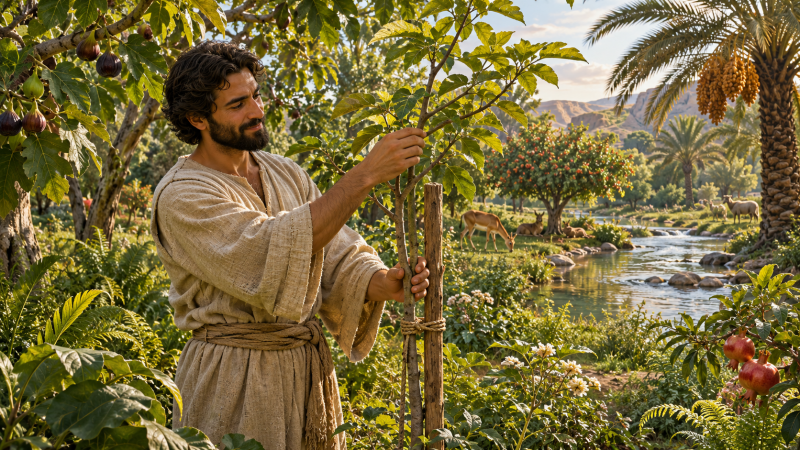
God gave human beings the authority to rule over the earth and care for His creation. Adam and Eve were responsible for the animals and the natural world, and they could enjoy everything God had made. He gave them not only a beautiful place to live, but also an important responsibility. God did not create people to be slaves to the earth. He created them to rule over His creation while enjoying His blessing.
We find this responsibility in the very first chapter of the Bible. After creating Adam and Eve in His own image, God blessed them. They were to have children, fill the earth, and rule over creation. But what did this actually mean? How were Adam and Eve supposed to use their authority? And what was life like before sin entered the world?
God Gave Humanity Authority to Rule
In Genesis 1, we read how God created the heavens and the earth. He made plants and trees, fish in the sea, birds in the sky, and animals on the land. When everything was ready, He created human beings in His own image on the sixth day. Adam and Eve had a special place in God's creation because He gave them authority over everything He had made.
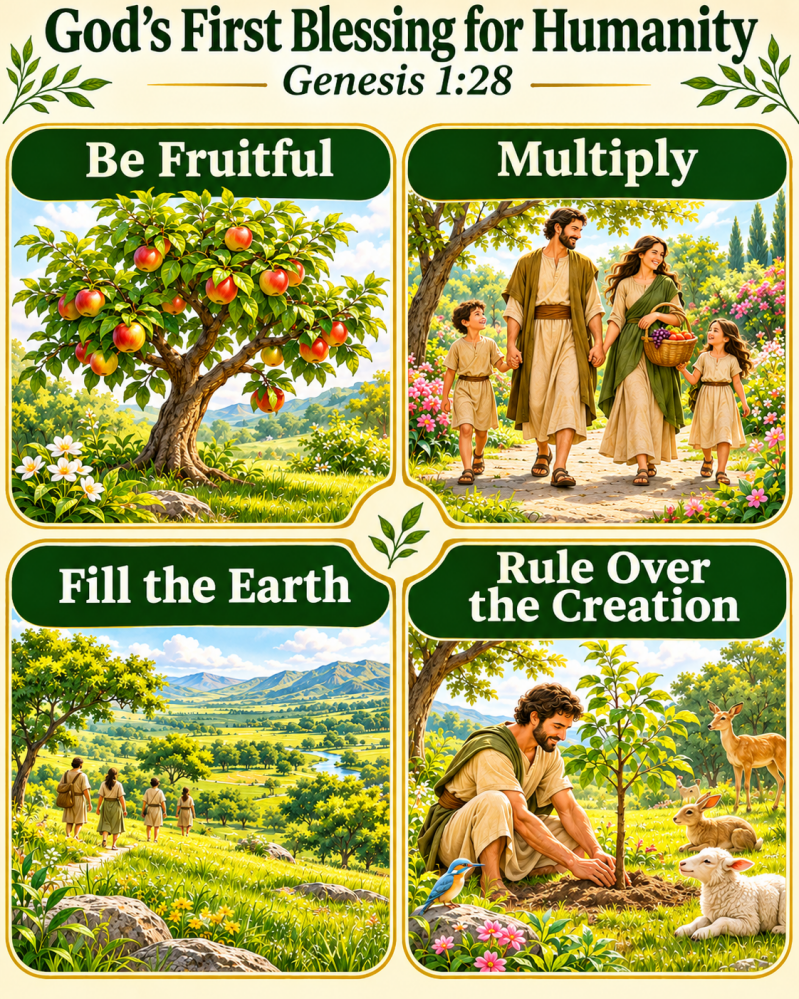
In Genesis 1:28, we read that God blessed them and said:
“Be fruitful and multiply; fill the earth and subdue it.” (Genesis 1:28)
God gave Adam and Eve two important responsibilities. They were to have children and fill the earth, but they were also to rule over creation. God gave them authority over the animals and the earth itself. This meant that human beings had a special position in His creation. They were not meant to be ruled by animals or nature. Instead, God gave them the authority to rule over creation on His behalf.
What makes this especially interesting is that God gave them this responsibility before sin entered the world. Ruling over the earth was not a consequence of the fall. It had been part of God's good plan from the very beginning. God did not create people to live on earth without any authority. He wanted Adam and Eve to take responsibility and rule with wisdom.
Of course, this did not mean that God Himself no longer had authority over the earth. He remained the Creator and the supreme King. Adam and Eve had not earned their authority. They had received it from God. That is why they needed to use it according to His will. They could rule over the earth, but they still had to obey their Creator.
What Does It Mean to Rule Over Creation?
When you hear the word "rule," you might think of a king who rules over a country. Or perhaps you think of a leader who makes important decisions and has a lot of power. Sometimes, we also associate ruling with people who abuse their authority, such as dictators who oppress others. But that was certainly not what God intended when He gave Adam and Eve authority over the earth.
In the original Hebrew text of Genesis 1:26–28, we find the word radah. This word means "to rule," "to reign," or "to exercise authority." God really did give Adam and Eve authority to rule over creation. Human beings were given a higher position than the animals and were allowed to exercise authority over everything God had entrusted to them.
David writes about this:
“You have made him to have dominion over the works of Your hands; You have put all things under his feet.” (Psalm 8:6)
In Psalm 8, David is amazed by the special place God has given humanity. As he looks at the heavens, the moon, and the stars, he realizes how great God is. Yet God has crowned human beings with glory and honor and given them authority over His creation. David mentions sheep, cattle, wild animals, birds, and fish. God created all these animals, but He gave human beings authority to rule over them.
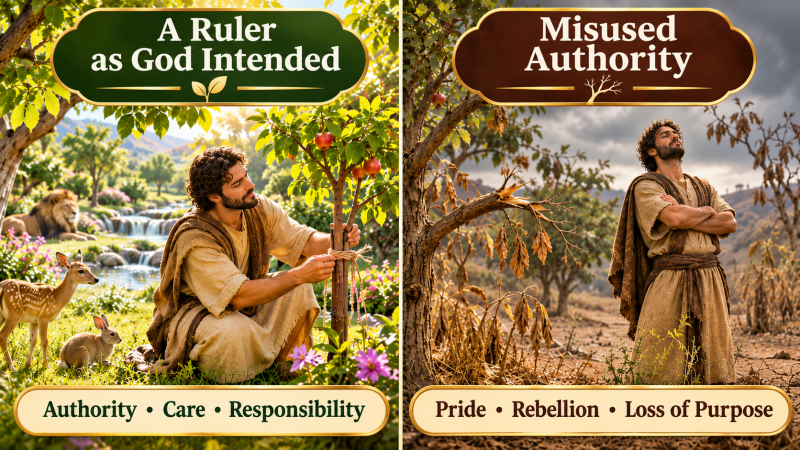
However, this did not mean that Adam and Eve could simply do whatever they wanted. God had created them in His image, and they were righteous. They were not greedy or selfish, and they had no desire to abuse their authority. God wanted them to take good care of creation and look after everything properly.
Think about a good king. He does not only care about himself, but also about the people and the country he rules. He wants his people to be safe, have enough food, and be treated fairly. In the same way, God wanted Adam and Eve to use their authority wisely.
So ruling over creation was about more than having an important position. God had also given Adam and Eve the responsibility to take good care of everything He had made.
God Gave Adam the Responsibility to Care for the Garden of Eden
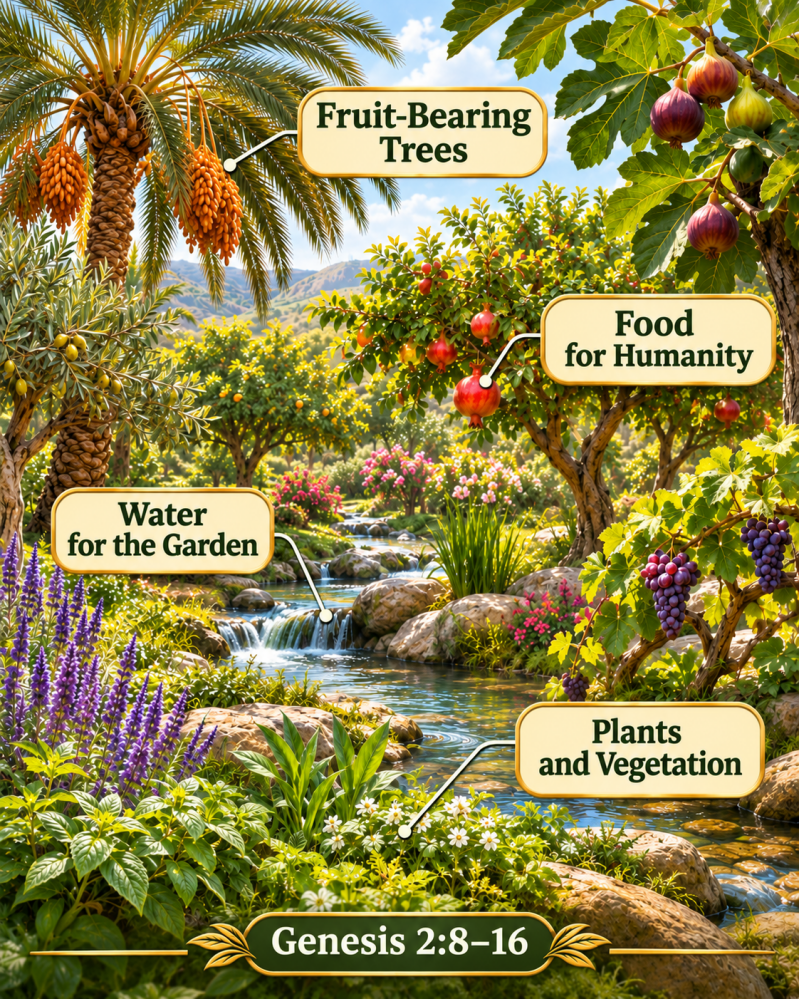
In Genesis 2, we see how Adam was to use the authority God had given him. God had created a beautiful garden filled with all kinds of trees and plants. A river flowed through it, providing plenty of water. There were also fruit trees that Adam could eat from. God placed him in this wonderful garden and gave him a clear responsibility.
“Then the LORD God took the man and put him in the garden of Eden to tend and keep it.” (Genesis 2:15)
Adam had work to do. He was not only allowed to enjoy the garden, but he was also responsible for taking care of it. For example, he could look after the trees and plants and make sure the garden stayed in good condition. God had created everything, but He gave Adam the responsibility to care for what He had made.
Imagine how wonderful that must have been. Adam lived in a beautiful garden filled with healthy trees and plants. He could enjoy nature, the animals, and the delicious food God had provided. At the same time, he could spend his days caring for the garden. His work was not a punishment, and he did not have to work himself to exhaustion just to get enough food. He could enjoy God's blessing as he carried out his work.
This teaches us something important. Some people think that work only began after the fall. After all, Genesis 3 tells us that Adam would have to work hard to produce food. But God had already given Adam work to do before sin entered the world. Work had been part of God's good plan from the very beginning. The difference was that Adam had not yet experienced the curse, the exhausting labor, and the difficult conditions that would come later.
God also gave Adam another special task. In Genesis 2:19–20, we read that God brought the animals to Adam so that he could name them. God had created the animals, but He allowed Adam to decide what they would be called. This shows us once again that God had not only given human beings an important position. He had also given Adam the freedom to carry out his responsibilities.
God Had Already Provided Everything They Needed
One of the wonderful things about Adam and Eve's lives was that God had already provided everything they needed. Before creating human beings, He had made the earth fruitful. All kinds of plants and trees were growing and producing food. Adam and Eve did not have to provide everything for themselves. God had already prepared a beautiful place for them to live.
In Genesis 1:29, we read that God gave them plants that produced seeds and trees that produced fruit with seeds for food. In Genesis 2:16, God also told Adam that he could freely eat from the trees in the garden, except for the tree of the knowledge of good and evil. This means there was already plenty of food available before Adam even began his work.
Think about the difference between Adam and a farmer today who has to work on land that is not fertile. The farmer might first have to remove stones, prepare the soil, plant seeds, and water the ground. Then he has to wait and see whether the crops will grow well. Adam did not have to start this way. God had already placed him in a fertile garden filled with trees that produced food.
This did not mean that Adam had nothing to do. He was still responsible for taking care of the garden. But he did not have to worry about running out of food. God had already blessed him with everything he needed. Adam could enjoy what God had provided while taking good care of everything entrusted to him.
This shows us how wonderful God's original plan was. Human beings were not created to spend their lives constantly struggling to survive. They were meant to enjoy God's abundance, have a personal relationship with Him, and carry out their work without the exhausting labor that would come after the fall.
How the Fall Changed Human Life
Sadly, Adam and Eve did not continue to obey God. He had told them not to eat from the tree of the knowledge of good and evil. Yet they chose to eat from it anyway. As a result, sin entered their lives, and everything changed.
One of the consequences was that the ground was cursed. God said to Adam:
“Cursed is the ground for your sake; In toil you shall eat of it.” (Genesis 3:17)
Before the fall, Adam could take care of a beautiful, fertile garden. But after he disobeyed God, getting enough food became much harder. The ground would produce thorns and thistles, and Adam would have to work by the sweat of his face to eat bread (Genesis 3:18–19). The work he had once been able to do without the effects of the curse became much more difficult.
This shows us how serious the consequences of the fall were. God had given human beings authority over the earth, but now they had to deal with cursed ground and difficult circumstances. Adam would have to work hard to get enough food, and eventually he would die. This was not the life God had originally intended for Adam and Eve. He had created them to rule over the earth while enjoying His blessing.
Thankfully, the fall was not the end of God's plan. Jesus Christ came to earth to redeem us from sin and restore our relationship with our heavenly Father. Through Him, we can once again discover the blessings God has for His children. Jesus has opened the way for us to live as God intended.
What Does Our Authority Over the Earth Mean for Us Today?
When we understand why God gave human beings authority over the earth, we see that authority and responsibility belong together. Adam and Eve had been given a special position, but they were also expected to take good care of everything God had given them. They could enjoy the beautiful garden, but they were also responsible for maintaining it.
This is important for us today as well. God has given us many things that we are responsible for, such as our possessions, our work, animals, and the environment around us. When something is your responsibility, you should take good care of it. Imagine you have a garden. You can enjoy its flowers, plants, and trees, but you also need to look after them. Otherwise, the garden will eventually become neglected.
The same is true for other responsibilities. If you are in a position of leadership, you should not use your authority to oppress others. Instead, you should take good care of the people you lead and treat them fairly. And when God has given you certain possessions or abilities, you can be thankful for them and use them wisely.
We should also never forget that God is above everything. He is the Creator and the supreme King. Everything we have ultimately comes from Him. That is why we should carry out our responsibilities in a way that honors His will.
In this Bible study, we have seen that God gave human beings a special place in His creation from the very beginning. Adam and Eve were allowed to rule over creation, enjoy God's abundance, and take good care of the earth. The fall changed their lives, but God's original plan shows us how wonderfully He had created humanity.
God did not create human beings to be slaves to the earth. He created us to rule over His creation while enjoying His blessing. He gave us authority and responsibility so that we would take good care of everything He has entrusted to us.