Does God still love me, even after I've sinned?
Maybe you've said something you regret, hurt someone, or knowingly done something wrong. You know it wasn't right, and now you wonder how God sees you. Does He still love you? You may find that hard to believe, especially if you've made the same mistake several times.
The Bible gives us a clear answer: God loves you, even when you have sinned. His love didn't begin when you started doing good things, and it doesn't disappear when you do something wrong. That's because God's love doesn't depend on your behavior. It comes from who He is. He loves people, and that is why He took the first step to restore the broken relationship between Himself and humanity.
God loved you before you knew Him
When people become friends, they usually start by getting to know each other. They talk, discover what they have in common, and find out whether they get along. As they get to know each other better, their friendship can grow stronger. Our love for others is often influenced by who they are and how they treat us. But God's love is different. He didn't begin loving us when we started getting to know Him. The apostle John writes:
We love Him because He first loved us. (1 John 4:19)
Pay special attention to the word "first." God didn't wait for us to believe in Him or begin loving Him. He already loved us before we knew Him. Maybe there was a time in your life when you weren't interested in God at all. Even then, He loved you.
This is important to understand because some people believe they have to earn God's love. They try to be kinder, pray more often, and make better choices, hoping that God will love them more. But John teaches us the exact opposite. We don't have to earn God's love. We can love Him because He loved us first.
Later in his letter, John explains how God showed us this love. He sent His Son into the world so that we could live through Him (1 John 4:9-10). God didn't just say that He loved us. He showed His love through what He did.
God's love doesn't depend on how well you do
Imagine a child coming home with a bad report card. The child could have studied harder and may even have lied about doing their homework. Good parents won't simply ignore that behavior. They will talk to their child and explain why it was wrong. But does that bad report card mean they no longer love their child? Of course not. Their love doesn't depend on the grades their child gets.
This example helps us understand something about God's love. When we make wrong choices, there can be consequences. But that doesn't mean God suddenly stops loving us.
Of course, this doesn't mean God approves of sin. Sin is anything we do that goes against His will, such as lying, cheating, or deliberately hurting someone. God is not only loving but also just. He takes sin seriously and doesn't want people to continue living in it. Yet He has not given up on sinful humanity. Because of His love, He has made a way for us to restore our relationship with Him.
Perhaps you sometimes judge how God feels about you by looking at your own behavior. On days when you have prayed a lot and helped others, you feel close to God. But when you've lost your temper or done something wrong, you start thinking that He is disappointed in you and loves you less. Your confidence then depends on how well you have behaved, even though God's love comes from His own character.

People can stop loving you, but God cannot
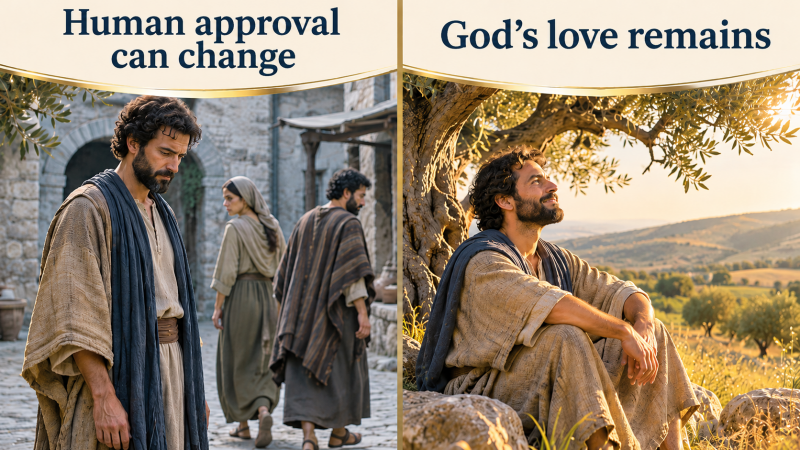
In our relationships with others, we sometimes discover that love and appreciation can change. Maybe you've had a close friend who suddenly started avoiding you. You couldn't understand what had happened until you found out that someone had told them something negative about you. That can be very painful, especially when the story isn't even true. People don't always know the whole truth. Sometimes they are influenced by rumors, jealousy, or other people's opinions. As a result, someone who once thought highly of you may suddenly see you very differently.
But God is not like that. Nobody can tell Him something about you that He doesn't already know. He knows your thoughts, words, and actions. He knows the good things you've done, but He also knows every mistake you've made. Even the things you hide from other people are known to Him. Yet He has chosen to love humanity. He already knew how sinful people were when He decided to send His Son into the world. His love was never based on a false or incomplete picture of who we are.
That's why you don't need to measure God's love by what other people think of you. Some people may think you're not good enough. They may reject you or misunderstand you. But that doesn't mean God sees you the same way. His love doesn't depend on how much other people appreciate you.
Nothing can take God's love away from you
The apostle Paul takes this even further. He explains that not even difficult circumstances or powerful enemies can separate us from God's love in Jesus Christ.
For I am persuaded that neither death nor life, nor angels nor principalities nor powers, nor things present nor things to come, nor height nor depth, nor any other created thing, shall be able to separate us from the love of God which is in Christ Jesus our Lord. (Romans 8:38-39)
Paul uses powerful words here. He mentions life and death, the present and the future, height and depth. Then he says that no other created thing can separate us from God's love in Jesus Christ. His message is clear: no power is stronger than God's love.
It's important to understand that Paul is speaking here about people who believe in Jesus Christ and belong to Him. This wonderful promise is for them. But what if you don't know Jesus personally yet and don't believe in Him? You can come to Him too. God invites you to repent, believe in Jesus, and receive the new life He gives. Then you, too, can live with the confidence that He loves you.
When you read the whole chapter, you discover that Paul also talks about the difficulties believers can face. In Romans 8:35, he mentions things like distress, persecution, and danger. Experiences like these can make you wonder where God is. But they don't mean His love has disappeared.
This is important to remember when you're going through a difficult time. Maybe you're worried about your future, dealing with deep sadness, or unsure how to solve certain problems. At times like these, God can feel very far away. But your feelings don't determine how much He loves you. One day you may feel His love strongly, while the next day you hardly feel it at all. That's why your confidence should not rest only on your feelings, but especially on what God has said in His Word.
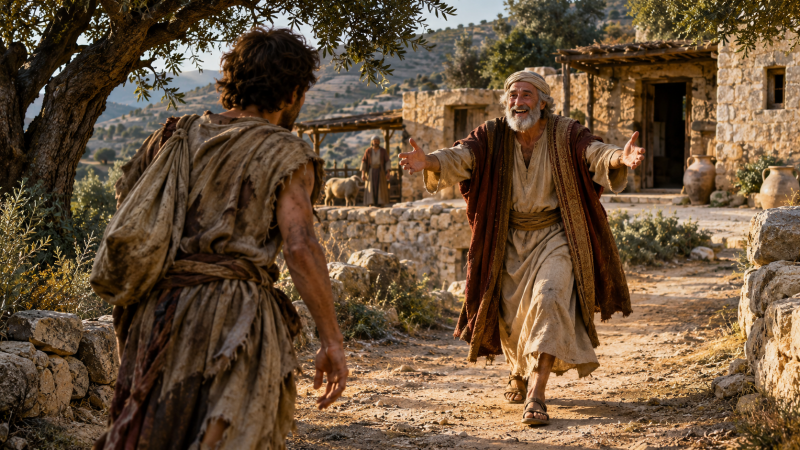
A father who runs to meet his son
Jesus told a parable that beautifully shows how God responds to people who have done wrong. It is the well-known parable of the prodigal son, found in Luke 15:11-32.
In this story, a father has two sons. The younger son asks his father for his share of the inheritance. As soon as he receives the money, he leaves for a distant country, where he wastes everything. Eventually, he runs out of money, and a famine strikes the land. He becomes so poor that he even longs to eat the food given to the pigs. Then he begins to think about his situation. He realizes how badly he has behaved and decides to return to his father. He doesn't expect to be welcomed back as a son. Instead, he prepares what he will say. He plans to admit his sins and ask his father to let him work as a servant. But when he returns, something remarkable happens. His father sees him coming while he is still far away. Jesus describes what the father does next:
... ran and fell on his neck and kissed him. (Luke 15:20)
What a beautiful response! The father doesn't wait for his son to reach the house. He runs to meet him and embraces him. He is overjoyed that his son has returned. Of course, the young man had done wrong. He had wasted his inheritance and caused his father great sadness. Yet his father had never stopped loving him. When the son repented and came home, he didn't have to spend years proving that he deserved to be loved again.
Through this parable, Jesus shows us how deeply God desires to restore our relationship with Him. He doesn't want people to stay away from Him because of their sins. When someone realizes they have done wrong, they can turn back to God. Where there is repentance, God's love can flow again.

Jesus shows us how great God's love is
The parable of the prodigal son shows us that God desires to restore our relationship with Him. But the Bible also tells us what God has done to make that restoration possible. Sin had broken the relationship between God and humanity. We couldn't restore that relationship ourselves, and God didn't owe us anything. Yet because of His love, He took the first step to save us. Jesus spoke about this in these well-known words:
For God so loved the world that He gave His only begotten Son, that whoever believes in Him should not perish but have everlasting life. (John 3:16)
Think about how much love these words reveal. God loved the world, and that is why He gave His only begotten Son. He didn't do this because everyone was living a good life or because people had earned His love. He did it because He didn't want humanity to perish. Paul makes this even clearer when he writes:
But God demonstrates His own love toward us, in that while we were still sinners, Christ died for us. (Romans 5:8)
Paul doesn't say that Jesus died for us after we had become good people. Jesus died for us while we were still sinners. This shows us just how great God's love is. He didn't wait until we had put our lives in order. He sent His Son to save us. Jesus gave His life so that we could be reconciled to God.
And God's desire goes beyond simply restoring our broken relationship with Him. He wants us to become His children. John writes:
Behold what manner of love the Father has bestowed on us, that we should be called children of God! (1 John 3:1)
God doesn't just want people to be saved. He also wants them to know Him personally as their heavenly Father. Through Jesus Christ, we can become His children and enjoy a loving relationship with Him.
Living with the confidence that God loves you
When you begin to understand how much God loves you, it changes the way you see Him. You don't have to be afraid that He will immediately reject you when you do something wrong. You can be honest with Him, admit your sins, and return to Him. Think again about the prodigal son. He had wasted his father's money and made terrible choices. Yet he decided to go home. And when he did, he discovered that his father still loved him.
Knowing that God loves you should also affect how you treat other people. When you're confident in His love, you don't have to spend your life trying to please everyone. Of course, it's important to listen to fair criticism and correct your mistakes. But your worth is not determined by what other people think of you. The love you receive from God should also encourage you to treat others with patience, kindness, and love.
Maybe you've done something you deeply regret. You feel ashamed of certain choices you've made, or you find it difficult to believe that God still loves you. Remember that God already knew about our sins when He sent His Son into the world. He knew we were sinners, and yet He loved us. That's why you don't have to stay away from Him because of your mistakes. His love is a reason to return to Him.
This doesn't mean you can simply continue living in sin. God loves you, but He doesn't want sin to destroy your life. That's why He calls you to repent: to admit your sins, turn away from what is wrong, and choose to do His will. God wants you to live free from sin and have a loving relationship with Him.